
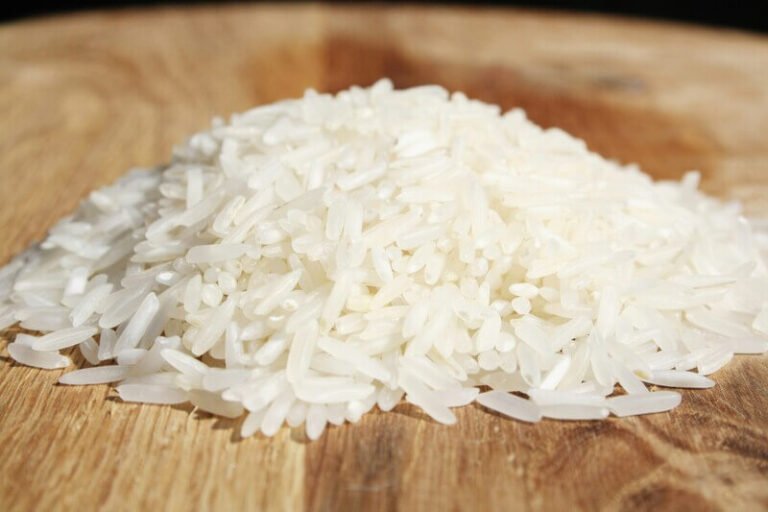
🍚 320 g (11 oz) Carnaroli or Arborio rice, premium quality
🧈 80 g (2.8 oz) clarified butter (half for toasting, half for finishing)
🧅 1 small white onion, finely chopped
🦴 30 g (1 oz) beef marrow (optional, but traditional)
🍷 100 ml (3.4 fl oz) dry white wine (Pinot Grigio or Soave recommended)
🍗 1.2 liters (5 cups) hot, filtered beef stock
🌸 0.15 g saffron pistils (about one small sachet)
🧂 Fine sea salt, to taste
🧀 60 g (2 oz) grated Parmigiano Reggiano or Grana Padano
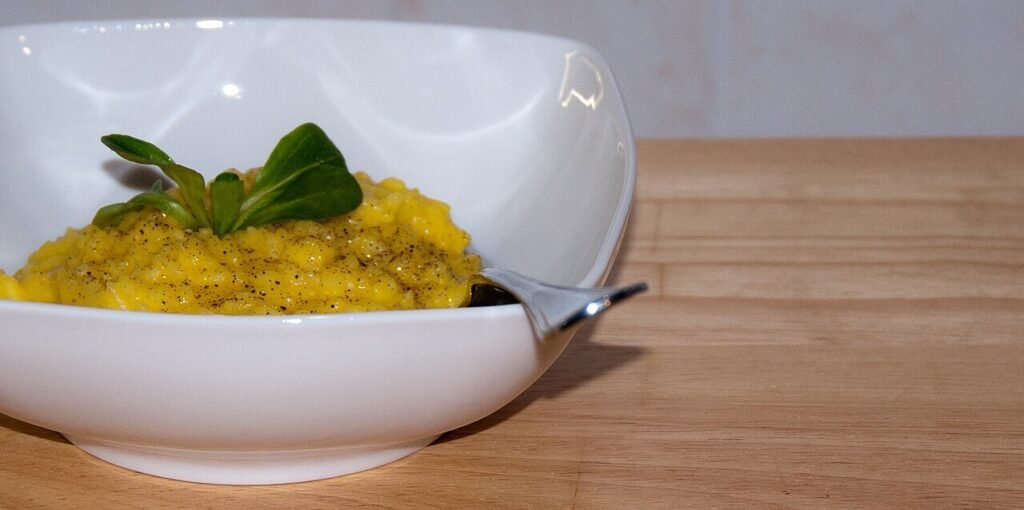
Milanese Risotto is an icon of Italian cuisine, a symbol of Lombard refinement and tradition. With its unmistakable aroma of pure saffron and the creamy consistency achieved through perfect mantecatura, this dish represents the essence of Milanese culinary art.
Born in the heart of Milan, it’s now one of the most sought-after and replicated recipes on cooking blogs around the world. However, creating a true Risotto alla Milanese requires time, precision, technique, and the right professional utensils.
In this guide, you’ll follow the authentic, step-by-step method complete with homemade stock, saffron pistils, clarified butter, and perfectly toasted Carnaroli rice. This is not just food: it’s a journey through the golden history of Milanese gastronomy.
Heavy-bottomed copper or stainless-steel saucepan – ensures even heat distribution.
Wooden spoon – essential for stirring without damaging the rice grains.
Stock pot – keeps your broth hot and ready throughout cooking.
Fine strainer or chinois – to achieve a perfectly clear, elegant stock.
Precision scale – ideal for measuring saffron and butter precisely.
Digital thermometer – to maintain broth temperature around 80°C (175°F).
Glass or porcelain bowl – for dissolving saffron in warm broth.
Preheated serving plates or risotto dish – to preserve creaminess when serving.
💡 Tip: a good-quality set of copper cookware and wooden utensils will elevate both the cooking process and the final result a worthwhile investment for every home chef.
1️⃣ Preparing the Meat Broth – The Foundation of Flavor
Every perfect risotto begins with an excellent stock.
Place beef bones, a carrot, celery stalk, and onion on a cutting board. Use a sharp chef’s knife to cut the vegetables into even chunks; this helps release their flavors evenly during simmering.
Transfer everything to a large, heavy-bottomed pot (stainless steel or copper is best) and cover with cold water. Add a clove and, for a richer flavor, an optional marrow bone.
Bring to a gentle boil over medium-low heat. Skim any impurities that rise to the surface using a stainless-steel ladle.
Simmer slowly for at least 2 hours, partially covered. Once ready, strain the broth through a fine mesh sieve or chinois directly into a thermal jug to keep it warm during cooking.
👉 A high-quality strainer or chinois is a must-have, as it ensures a clear, refined broth free of residue.
2️⃣ Toasting the Rice – The Technical Heart of Risotto
Heat a heavy-bottomed copper or stainless-steel saucepan. Add half the clarified butter, the beef marrow (if using), and the finely chopped onion.
Using a heat-resistant wooden or silicone spatula, stir gently until the onion turns translucent. This slow sweating process enhances aroma without browning.
Now add the rice and begin to toast it. Stir continuously with a wooden spoon over medium heat; this prevents sticking and coats each grain with butter.
After 3 to 4 minutes, the grains should look glossy, slightly transparent, and lightly fragrant — the perfect sign that toasting is complete.
3️⃣ Deglazing – Balancing Aromas
Pour in the white wine and let it evaporate completely over medium-high heat.
For precision, use a digital kitchen thermometer: ideal evaporation happens between 85°C and 90°C (185–195°F).
Stir with your wooden spoon or a flat-edged spatula to prevent the rice from sticking.
This stage “seals” the grains, ensuring an even, controlled release of starch during cooking.
4️⃣ Cooking – The Ritual of the Ladle
Now begins the most delicate phase.
Add your first ladleful of hot broth (about 80°C / 175°F) using a deep ladle with a spout for control.
Stir continuously in gentle circles; this motion helps release the rice’s starch, which gives risotto its creamy texture.
Once the broth is almost absorbed, add another ladle and repeat.
Halfway through cooking (around 8 minutes), dissolve the saffron pistils in two tablespoons of warm broth (in your glass or porcelain bowl) and pour it into the risotto.
Continue adding broth and stirring until you achieve a smooth, wavy (all’onda) texture.
Total cooking time is about 17 to 18 minutes, depending on the pan.
👉 Copper pans retain heat better than thin stainless-steel ones, ensuring even cooking and superior texture.
5️⃣ Mantecatura – The Final Gesture
Remove the risotto from the heat and add the remaining butter and grated cheese.
Using a flat whisk or wooden spoon, stir vigorously to incorporate air and emulsify the starches and fats.
Cover with a lid and let rest for 2 minutes; the residual heat will finish the emulsification, giving your risotto its signature glossy, velvety texture.
Serve immediately on preheated plates using a serving ladle or stainless-steel ring mold for perfect presentation.
The result is a golden, creamy risotto that embodies the spirit of Milan — refined, comforting, and timeless.
Choose the right rice: Always opt for Carnaroli or Vialone Nano — they release starch gradually, giving your risotto that signature creamy texture without becoming mushy.
Keep the broth hot but not boiling: The perfect temperature (around 80°C / 175°F) ensures each ladle integrates smoothly without shocking the rice.
Use clarified butter: It resists higher heat and provides a richer, nutty aroma — a detail that separates a good risotto from a great one.
Perfect consistency (“all’onda”): The risotto should move gently on the plate like a soft wave — creamy but never runny.
Wine pairing: A Chardonnay Riserva or Franciacorta Brut enhances the saffron’s floral notes and balances the buttery finish.
Gourmet touch: Add a few drops of browned butter (burro nocciola) just before serving to intensify the aroma, or finish with a shaving of white truffle for a luxurious twist.
Avoid common mistakes: Never rinse the rice (it removes starch), and never add cream — the silkiness must come only from butter and cheese.
🧊 Storage & Reheating
Risotto alla Milanese is best enjoyed immediately, at its peak of creaminess and aroma.
However, if you need to store it:
Refrigerator: Store in an airtight container for up to 48 hours.
Reheating: Add a small ladle of hot broth or a knob of butter, and stir over low heat until creamy again.
Do not freeze: The texture and starch balance will be lost after thawing.
If you have leftovers, try transforming them into “Arancini alla Milanese” — shape the risotto into small balls, fill with a cube of cheese, coat in breadcrumbs, and fry until golden.
It’s the perfect zero-waste gourmet snack.
The origins of Risotto alla Milanese date back to the 16th century, during the Italian Renaissance.
According to legend, Valerio di Fiandra, a young Flemish glass artist working on the stained glass windows of Milan’s Cathedral, decided to add saffron to rice served at his daughter’s wedding in 1574. Saffron, used to color glass, became the symbol of celebration and prosperity — “coloring the rice with gold.”
The first written recipe appeared in 1829 in Felice Luraschi’s cookbook “Nuovo cuoco milanese economico”, describing a saffron risotto enriched with beef marrow and butter.
Since then, this “golden rice” has become one of Italy’s most prestigious dishes, served everywhere from local osterie to Michelin-starred restaurants.
By Giorgio Minguzzi from Italy – Risotto allo zafferano, CC BY-SA 2.0,
Foto di Emma Miller su Unsplash
Share this recipe
Lorem ipsum dolor sit amet, consectetur adipiscing elit. Ut elit tellus, luctus nec ullamcorper mattis, pulvinar dapibus leo.